Innovative Laser Technologies
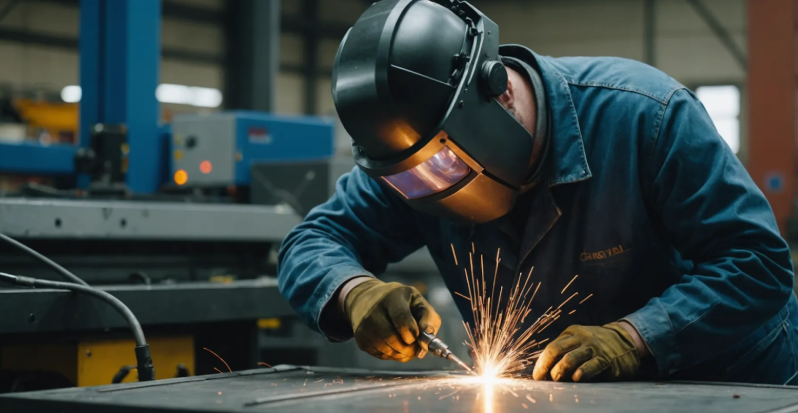
Introduction to Modern Laser Innovation
Innovative laser technologies are transforming industries worldwide by delivering unmatched precision, speed, and efficiency. From manufacturing and medical procedures to telecommunications and scientific research, laser systems have become essential tools for advanced operations. As industries evolve, the demand for high performance, energy efficient, and application specific laser solutions continues to grow.
Evolution of Laser Technology
Laser technology has undergone significant advancements since its introduction. Early lasers were bulky, power hungry, and limited in functionality. Today, compact and efficient systems offer exceptional accuracy and reliability. Innovations such as fiber lasers, ultrafast lasers, diode lasers, and CO₂ lasers have broadened the scope of industrial and scientific applications.
Types of Innovative Laser Technologies
Fiber Laser Technology
Fiber lasers use optical fibers doped with rare earth elements to generate high quality beams. They are known for their long lifespan, low maintenance needs, and excellent beam stability. Fiber lasers are widely used in cutting, welding, engraving, and marking due to their high efficiency and superior performance.
Ultrafast Laser Technology
Ultrafast lasers, including femtosecond and picosecond lasers, produce incredibly short pulses. These pulses allow material processing with minimal thermal damage, making them ideal for micro machining, medical procedures, and semiconductor manufacturing. Their precision enables clean edges and high detail even on delicate materials.
Diode Laser Technology
Diode lasers are compact, energy efficient, and highly reliable. These lasers are commonly used in consumer electronics, medical treatments, and communication systems. Their small size and cost effectiveness make them suitable for mass production and everyday use.
CO₂ Laser Technology
CO₂ lasers are powerful and versatile, producing infrared radiation perfect for cutting and engraving organic materials. They are widely used in woodworking, textiles, leather processing, packaging, and signage due to their ability to produce clean and accurate cuts.
Excimer Laser Technology
Excimer lasers use reactive gases to generate ultraviolet light capable of extremely fine precision. They are vital in eye surgeries such as LASIK and in the production of microelectronic components. Their unique wavelength allows them to remove material with extreme accuracy while minimizing thermal effects.
Applications of Innovative Laser Technologies
Industrial Manufacturing
Laser technologies revolutionize manufacturing by enabling high speed and high precision operations. Key processes include cutting, welding, drilling, marking, and surface treatment. These methods reduce waste, improve efficiency, and enhance product quality.
Medical and Healthcare Procedures
In healthcare, lasers are used for surgeries, dermatology, ophthalmology, and dental treatments. Their ability to target tissues precisely minimizes pain, reduces recovery time, and improves patient outcomes.
Communication and Data Transfer
Laser based systems are essential for fiber optic communication networks. They support high speed data transmission across long distances with minimal signal loss. This innovation powers global connectivity and supports rapidly growing digital demands.
Scientific Research and Development
Researchers rely on advanced lasers for spectroscopy, particle tracking, microscopy, and quantum experiments. Their precision and stability allow scientists to explore phenomena at micro and nano levels.
Automotive and Aerospace Industries
These industries use laser technologies for precision welding, additive manufacturing, quality inspection, and material processing. Laser based techniques help build stronger, lightweight, and more efficient components.
Future Trends in Laser Innovation
Future advancements in laser technologies will continue to emphasize efficiency, automation, and intelligent control systems. AI powered laser systems will enhance accuracy and adapt to real time conditions. Emerging fields such as quantum communication, photonic computing, and advanced biotechnology will rely heavily on new laser breakthroughs.
Conclusion
Innovative laser technologies are reshaping industries by providing superior precision, reliability, and versatility. As advancements continue, laser systems will play an even more critical role in manufacturing, healthcare, communication, and scientific exploration. Organizations integrating modern laser solutions gain a competitive advantage through improved productivity, enhanced quality, and innovative capabilities.