Improving Heat Management in Modern Industrial Facilities
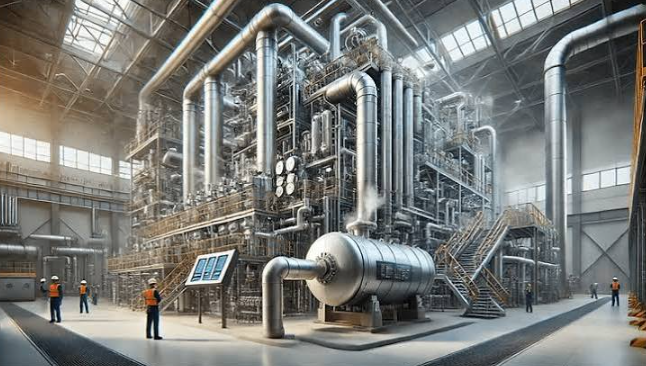
Heat management is a critical part of maintaining reliable industrial operations. Manufacturing plants, power generation facilities, chemical processing units, and commercial buildings all depend on equipment that can remove excess heat efficiently. When cooling systems fail to maintain the required temperatures, production processes may become unstable, machinery can experience additional stress, and operating expenses may increase.
An industrial cooling tower helps manage this challenge by transferring heat from circulating water into the atmosphere. However, achieving dependable performance requires more than installing a tower with sufficient capacity. Equipment design, water quality, airflow, installation conditions, and ongoing maintenance all influence the results.
For businesses planning a new installation or upgrading an existing facility, understanding these factors makes it easier to select an appropriate cooling solution and establish a reliable long-term operating strategy.
The Role of Cooling Towers in Industrial Operations
Many industrial processes generate heat as a natural result of mechanical work, chemical reactions, compression, or electrical energy conversion. If that heat is not removed effectively, equipment temperatures can rise beyond acceptable operating limits.
Cooling towers support heat rejection by bringing warm circulating water into contact with air. A small portion of the water evaporates, carrying heat away from the remaining water. The cooled water is then returned to the process or equipment that requires cooling.
These systems are commonly used in refineries, power plants, food processing facilities, pharmaceutical production, plastics manufacturing, steel operations, and large HVAC installations. Although the basic principle remains similar, the tower configuration and construction can differ significantly according to the application.
A system designed for a commercial building may not be suitable for a demanding industrial process. Industrial environments can involve higher heat loads, variable operating conditions, aggressive water chemistry, and continuous production schedules. Equipment selection must reflect these practical requirements.
Evaluating Industrial Cooling Solutions
Selecting a cooling system should begin with an assessment of the facility rather than a comparison of equipment prices. A clear understanding of operating conditions helps engineers identify suitable designs and avoid unnecessary compromises.
Calculate the Required Cooling Capacity
Cooling capacity is determined by the amount of heat that must be rejected from the process. Engineers generally consider the circulating-water flow rate, hot-water temperature, target cold-water temperature, and the design wet-bulb temperature of the surrounding air.
The difference between entering hot water and leaving cold water is known as the cooling range. The approach describes the difference between the leaving cold-water temperature and the ambient wet-bulb temperature.
These measurements help establish whether a proposed tower can meet the required performance conditions. Buyers should provide accurate process data, including expected seasonal variations and changes in production demand.
It is also important to distinguish between nominal capacity and performance under actual site conditions. A tower’s ability to cool water depends on the temperature and humidity of the incoming air, the water flow, and the heat load. Reviewing performance at the intended design conditions helps prevent unrealistic expectations.
Consider the Operating Environment
The location of a cooling tower can affect its efficiency and service life. High ambient temperatures, airborne dust, industrial pollutants, coastal air, and limited ventilation may create additional challenges.
For example, a facility located in a dusty industrial area may need more frequent inspection of air passages, fill media, and water distribution components. Sites exposed to corrosive conditions may require suitable construction materials and protective measures.
Space restrictions should also be considered. Engineers need to evaluate foundation requirements, maintenance access, piping routes, lifting arrangements, and the distance between the tower and nearby structures.
Adequate clearance around air intakes and discharge points helps maintain airflow and reduces the risk of warm, humid air returning to the tower. Poor placement can compromise performance even when the equipment itself is correctly specified.
Comparing Cooling Tower Designs
Different cooling tower configurations provide different advantages. Understanding the available options helps businesses choose equipment that suits their process, site, and maintenance requirements.
Counterflow and Crossflow Systems
Counterflow towers move air upward against the downward movement of water. This arrangement can provide an efficient heat-transfer configuration and may be suitable where a compact footprint is important.
Crossflow towers allow air to move horizontally across falling water. Depending on the design, access to the water distribution system may be convenient, which can simplify certain inspection and servicing activities.
The decision between these configurations should consider the required thermal performance, installation space, water distribution arrangement, maintenance access, and expected operating conditions.
Induced-Draft and Forced-Draft Equipment
Induced-draft systems use fans near the discharge area to draw air through the tower. This arrangement is common in industrial cooling applications because it supports controlled airflow through the equipment.
Forced-draft systems use fans to push air into the tower. Their suitability depends on the system layout, environmental conditions, and engineering requirements.
Fan selection should account for airflow demand, motor efficiency, vibration, noise, and ease of servicing. Since fans and motors contribute to energy consumption, their performance can have a meaningful effect on the total operating cost.
Packaged, Modular, and Custom-Built Towers
Packaged cooling towers can simplify procurement and installation when their capacity and configuration match the application. Modular systems may offer flexibility when a facility expects demand to increase over time or wants to divide cooling capacity among multiple units.
Large or specialized operations may require custom-engineered designs. These can be necessary when a process has unusual thermal loads, strict space limitations, specific water-treatment requirements, or demanding environmental conditions.
The most suitable option depends on the complete operating situation. A detailed technical review is more useful than choosing a design solely because it is common in another industry.
What to Look for in an Equipment Partner
Choosing among industrial cooling tower companies requires an evaluation of technical capability, equipment quality, project experience, and long-term support. A supplier should understand the application’s requirements and be able to explain how its proposed solution addresses them.
Technical Knowledge and Project Experience
Relevant project experience can help demonstrate whether a supplier understands the challenges associated with a particular industry. Buyers should ask about installations with similar cooling loads, environmental conditions, water chemistry, and operating schedules.
Technical discussions should address performance calculations, construction materials, fan and motor specifications, fill media, drift eliminators, water distribution, and control arrangements.
A credible proposal should explain the assumptions behind the design. If operating data is incomplete, the supplier should identify the missing information rather than making unsupported performance promises.
Documentation and Installation Support
Good documentation supports smoother installation and easier maintenance. Depending on the project, useful documents may include general arrangement drawings, foundation details, electrical requirements, performance information, operation manuals, and spare-parts lists.
Buyers should also clarify who is responsible for installation, commissioning, testing, and operator training. Ambiguity around these responsibilities can lead to project delays or disagreements when the equipment is delivered.
For larger projects, a defined commissioning plan helps confirm that mechanical components, electrical systems, water distribution, and safety arrangements are functioning as intended.
Warranty and After-Sales Service
Cooling towers contain components that require inspection and eventual replacement. Fans, motors, bearings, nozzles, fill media, and drift eliminators may all need attention during the equipment’s operating life.
Before placing an order, businesses should review warranty coverage, service response arrangements, spare-parts availability, and the supplier’s ability to provide technical assistance. They should also understand which activities are covered by the warranty and which are considered routine maintenance.
Access to suitable replacement parts can reduce downtime, especially at facilities that operate continuously or have limited backup cooling capacity.
Water Quality and Environmental Management
Water management is essential for maintaining cooling tower performance. As water evaporates, dissolved minerals become more concentrated in the remaining circulating water. Without appropriate treatment and control, this can contribute to scale formation, corrosion, and biological growth.
A water-treatment program should be developed according to the makeup-water quality, operating conditions, materials of construction, and applicable regulations. Depending on the system, management practices may include filtration, chemical treatment, monitoring of conductivity, and controlled blowdown.
Cooling towers can also provide conditions that support the growth of microorganisms, including Legionella. Operators should follow relevant public-health requirements and maintain a documented water-management program. Cleaning, disinfection, monitoring, and corrective actions should be performed according to the facility’s risk assessment and applicable guidance.
Environmental considerations extend beyond water quality. Drift eliminators help reduce the amount of water droplets leaving the tower with the exhaust air. Noise controls may be necessary when equipment operates near offices, residential areas, or other noise-sensitive locations.
Responsible water and environmental management supports operational reliability while reducing avoidable risks.
Maintenance Practices That Protect Performance
Preventive maintenance helps identify developing issues before they cause equipment failure. A structured program should be based on manufacturer recommendations, operating conditions, and the consequences of unexpected downtime.
Important maintenance activities include:
- Inspecting fill media: Check for scale, deposits, damage, and blockages that may reduce heat-transfer efficiency.
- Examining water distribution: Confirm that nozzles and distribution channels deliver water evenly across the intended area.
- Checking fans and motors: Monitor vibration, noise, lubrication requirements, alignment, and electrical performance.
- Reviewing structural condition: Look for corrosion, loose fasteners, damaged supports, and deterioration of access components.
- Monitoring water quality: Review treatment records and investigate unusual changes in scale, corrosion, or biological control.
- Tracking operating data: Record temperatures, water flow, energy consumption, and other relevant measurements to identify performance changes.
Maintenance teams should document inspections and repairs. Consistent records help reveal recurring problems and support more informed decisions about component replacement or system upgrades.
Understanding the Total Cost of Ownership
The purchase price of a cooling tower does not represent its complete cost. Electricity, water consumption, treatment chemicals, labour, replacement parts, and production downtime can contribute substantially to expenses over the equipment’s lifetime.
A lower-cost unit may be less economical if it consumes more energy or requires frequent repairs. A more efficient design may justify a higher initial investment when it reduces operating costs and improves reliability.
Businesses should compare proposals using a consistent technical specification. This makes it easier to assess capacity, materials, energy requirements, warranty terms, installation scope, and service commitments on an equivalent basis.
Where appropriate, a life-cycle cost assessment can help estimate the long-term financial impact of competing options. The assessment should use realistic assumptions about operating hours, utility costs, maintenance intervals, and expected service life.
Frequently Asked Questions
- Which factors have the greatest influence on cooling tower performance?
Cooling performance depends on the heat load, water flow, entering and leaving water temperatures, ambient wet-bulb temperature, airflow, and condition of the heat-transfer surfaces. Water quality and maintenance also influence long-term efficiency.
- How can a facility reduce cooling tower operating costs?
A facility can improve cost control through suitable equipment selection, efficient fans and motors, regular cleaning, proper water treatment, performance monitoring, and preventive maintenance. The most effective measures depend on the existing system and operating conditions.
- Why is after-sales support important when purchasing a cooling tower?
Technical support and replacement-part availability help maintenance teams address faults and routine wear. Clear warranty terms, accessible documentation, and reliable service arrangements can reduce uncertainty and support faster recovery when problems occur.
Conclusion
Industrial cooling towers play an important role in maintaining stable temperatures and dependable production. Selecting the right system requires an understanding of cooling capacity, site conditions, tower configuration, water quality, and long-term maintenance needs.
Businesses should evaluate suppliers on technical competence, documented performance, installation support, spare-parts availability, and total ownership costs. A carefully planned cooling system can improve operating reliability, control energy and water use, and provide a stronger foundation for future industrial growth.