Why Do Stretch Marks Occur? How to Remove Stretch Marks Permanently
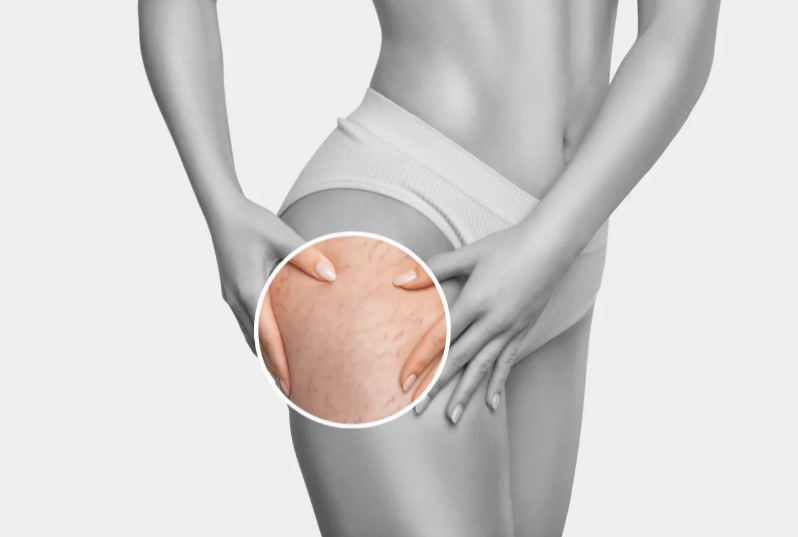
Stretch marks are common, scar-like marks (dermal scarring) that appear on your skin when the middle layer (also called dermis) tears because of rapid stretching for reasons like pregnancy, changes in body weight, or puberty. There are several ways to remove stretch marks, such as laser therapy, radio frequency, microneedling, retinoid creams, or by microdermabrasion (a non-invasive procedure to remove the outermost layer of dead skin cells).
Stretch marks are clinically called striae distensae, and there are different types based on their stage and appearance. These include:
- Striae Rubrae: Early-stage stretch marks appearing in red, pink, or purple colours.
- Striae Albae: Mature, older stretch marks that appear as scar-like with a silvery-white or skin colour.
- Striae Nigrae: Dark grey or black stretch marks found typically in individuals with darker skin tones.
- Striae Caerulea: Dark blue or purplish stretch marks, most common in people with darker complexions.
- Striae atrophicans: Thin, wrinkled, or depressed skin, resulting mainly from corticosteroid use.
Stretch marks removal is feasible in the early stages, although this results only in a reduction of the appearance rather than complete removal. Before delving deep into stretch mark treatment, let’s understand how they are formed and why they occur in the first place.
Reasons Why Stretch Marks Occur
Not everyone has these dermal scars or develops them overnight. So, why do stretch marks occur? The reason is hormonal fluctuations and genetics; they play a significant role in developing striae or stretch marks. Although stretch marks are not particularly harmful, they cause a lot of cosmetic distress. Here are the main reasons why striae are formed:
-
- Breakdown of collagen & elastin: When skin stretches quickly, the mechanical force exceeds the elastic limit of the skin, leading to the rupture of collagen and elastin fibres, causing scarring.
- Non-repairing Fibroblasts: When fibroblasts (skin structure-producing cells) fail to repair or replace damaged components of skin, stretch marks are formed.6
- High Cortisol and Glucocorticoids: An increase in cortisol hormone (produced by adrenal glands) weakens the skin’s elastic fibres, leading to stretch marks. Constant use of corticosteroids inhibits the production of new skin cells and breaks down collagen, causing stretch marks.
The table below shows the common risk factors that cause stretch marks.
| Cause | How does it lead to stretch marks |
| Pregnancy (striae gravidarum) | Hormonal changes + rapid abdominal skin stretching |
| Adolescence and Growth Spurts | Rapid weight gain or weight loss |
| Weight Loss or Gain | Skin contraction and expansion |
| Bodybuilding | Sudden stretching in skin due to muscle growth |
| Intake of Corticosteroids | Reduces collagen production |
| Genetics | Inherited skin elasticity issues |
| Hormonal issues (Cushing’s Syndrome) | High cortisol damages connective tissues |
Best Medical Treatments to Remove Stretch Marks
Stretch mark treatment has significantly evolved, offering multiple medical methods that can reduce, fade, or smooth the skin.
But if you are looking for ways to remove stretch marks permanently, there is no proven treatment for it yet.
Let’s explore some effective medical intervention techniques used widely.
Laser Therapy
Light and laser therapies are advanced treatment options for stretch marks. They stimulate elastin and collagen production, making the marks less visible and the skin smoother. Different types of laser therapies for stretch mark treatment include:
-
- Fractional CO2: In this procedure, a laser is used to create micro-wounds in the body and stimulate collagen and elastin production and reduce the stretch marks appearance by blending them with the surrounding skin.
- Pulsed dye laser: In this method, the blood vessels are dilated, and collagen production is stimulated using a laser light.
Microneedling with Radiofrequency
Microneedling is a process of creating controlled micro-injuries using fine needles. This procedure stimulates collagen and elastin production, thereby helping to reduce the appearance of stretch marks on the skin surface.
Microneedling is often combined with radiofrequency (heat energy) as a non-invasive treatment to reduce the appearance of stretch marks. It is effective for both new and older marks, offering satisfactory results.
Retinoid Creams (Tretinoin)
Retinoid cream is considered a helpful stretch mark removal cream, as it stimulates collagen production and accelerates the skin-repair process.
Retinoid cream derived from Vitamin A (containing tretinoin) is considered the best stretch mark cream as it is quite effective on early-stage red or pink stretch marks.
Chemical Peels
In this method, chemical peels containing glycolic acid are used to remove the skin’s top layers. It also helps stimulate fibroblasts, produce new collagen and elastin.
How to Remove Stretch Marks Permanently?
There is no 100% successful method to remove stretch marks permanently. The treatments and creams available only help reduce the appearance of dermal scars, depending on their stage.
You can also try natural, home remedies to reduce stretch marks, like:
-
- Aloe Vera – Its natural components, aloesin and polysaccharides, help to calm the skin and also boost collagen and elastin production.
- Shea/Coco Butter: The fatty acids present in these butters help improve the lipid layer of the skin and rebuild it. They also help in maintaining skin elasticity, although neither of these helps remove stretch marks altogether.
Conclusion
If you are wondering how to remove stretch marks permanently, no treatment guarantees complete removal. But taking action in the early stages can help reduce its appearance significantly, giving you satisfactory results.
Before opting for any medical treatment, you can choose to treat the initial appearance with a clinically tested stretch mark removal cream. The AreoVeda Stretch Marks Cream is a great solution as it is safe for everyone, including pregnant women. The product comes with ingredients like CryoCoffee, Ghee and Aloe Vera that soothe the skin and improve elasticity. The cream is lab-tested on human skin cells, Ecocert-certified and EWG-verified. The natural, toxin-free ingredients in AreoVeda’s stretch mark cream work gently but effectively on your skin, visibly reducing stretch marks in 4 weeks.