The Vision Problems Kids Don’t Tell You About – Because They Don’t Know Something’s Wrong
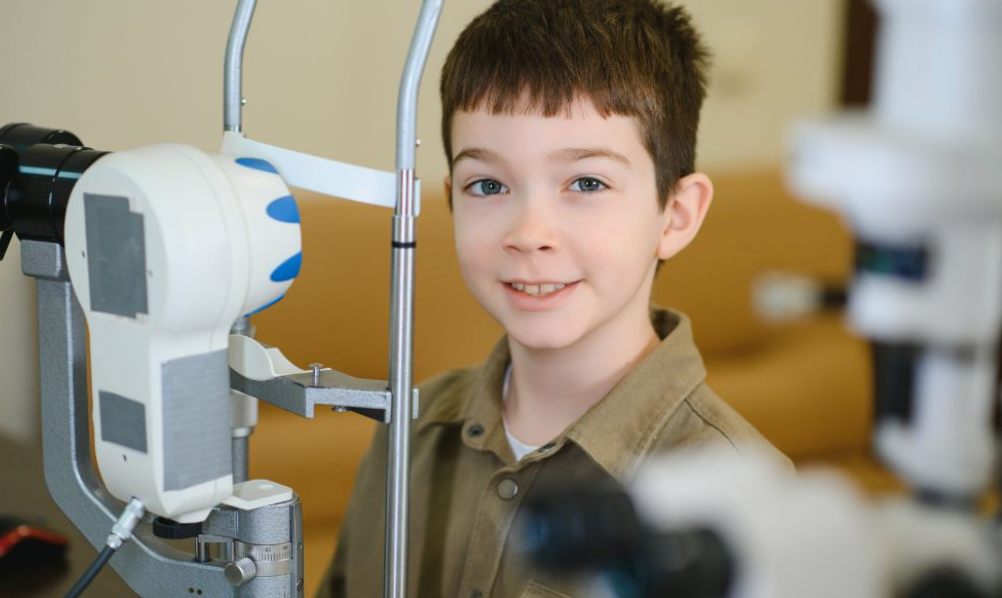
A child who has been seeing blurry since birth doesn’t know their vision is blurry. They’ve never experienced anything else. They don’t squint and announce “something’s wrong with my eyes” – they just adapt, quietly, in ways that often look like clumsiness, poor concentration, disinterest in reading, or being “a bit behind” academically.
This is the central, easy-to-miss truth about pediatric vision: children rarely report eye problems the way adults do, because they have no baseline for comparison. Many vision and eye health conditions in children show up as behaviour changes, learning struggles, or physical symptoms long before a child says anything that sounds like “I can’t see well.” By the time some of these signs become obvious enough for a parent to notice, the window for the most effective treatment may already be narrowing.
This is why understanding when and why to see a child eye specialist matters more than most parents realize – and why waiting for a child to complain isn’t a reliable strategy.
Why Children’s Eyes Need a Different Kind of Specialist
It’s worth understanding upfront that pediatric eye care isn’t simply adult eye care scaled down. A child eye specialist – typically a pediatric ophthalmologist – completes the standard medical and ophthalmology training pathway and then undergoes additional, dedicated training specifically in diagnosing and treating eye conditions that occur in infants and children, including the ability to recognize subtle signs in patients too young to describe what they’re experiencing.
This distinction matters because a child’s visual system is still actively developing – broadly until somewhere around age 8 to 12 – and the brain and eyes are learning to work together during this window in ways that are largely complete by adulthood. Conditions that interfere with this developmental process, if caught and treated early, can often be corrected. Left unaddressed during this developmental window, some conditions become permanent regardless of later treatment. This is what makes timing so consequential in pediatric eye care in a way that doesn’t apply in the same way to adult vision problems.
It’s also worth understanding the distinction between an optometrist and an ophthalmologist, since both terms appear constantly in this space and parents are often unclear on the difference. An optometrist completes a Doctor of Optometry degree, can examine eyes, test vision, and prescribe corrective lenses, but generally doesn’t attend medical school and has more limited authority to diagnose and treat eye diseases or perform surgery. A pediatric ophthalmologist is a medical doctor who can diagnose and treat the full range of eye diseases and disorders, prescribe medication, and perform surgery when needed. For routine vision checks and glasses prescriptions, an optometrist experienced with children is often an appropriate first step. For any suspected medical eye condition, structural abnormality, or anything beyond a straightforward refractive issue, a pediatric ophthalmologist is the right specialist.
See also: Transitioning Smoothly: The Benefits of Specialized Post-Hospitalization Care at Home
The Warning Signs Most Parents Miss
Because children adapt so effectively to vision problems, the signs are often behavioural or physical rather than a direct verbal complaint. Knowing what to watch for is one of the most practical things a parent can do.
Frequent squinting, particularly in bright light or when looking at distant objects like a television or classroom board, often signals a refractive vision problem.
Eye rubbing, excessive blinking, or unusual head tilting to compensate for blurry or misaligned vision can be subtle enough that parents attribute it to tiredness or habit rather than a vision issue.
Sitting unusually close to screens or holding books very near the face is a common, easy-to-spot sign of nearsightedness that’s frequently mistaken for simple preference.
Misaligned or wandering eyes (strabismus), where the eyes don’t point in the same direction consistently or occasionally, is a condition that needs evaluation – left untreated in early childhood, it can lead to amblyopia, where vision fails to develop properly in one eye, even though the eye itself is structurally healthy.
Excessive tearing not related to crying, cloudy-looking eyes, or extreme light sensitivity can be early warning signs of more serious conditions like childhood glaucoma, and warrant prompt evaluation rather than a wait-and-see approach.
Rapid, uncontrollable eye movements – rolling, jerking, or side-to-side motion – can be present from early infancy or develop over time, and should always be evaluated.
An unusual appearance to the pupil, including a white or cloudy reflection rather than the typical red-eye effect seen in flash photography, can indicate a range of conditions from cataracts to, in rare cases, more serious concerns, and warrants prompt medical attention.
Behavioural and academic signs – difficulty concentrating, reduced reading comprehension, headaches during or after visual tasks, words appearing to move on a page, or being labelled as inattentive or behind – are often misattributed to learning or attention issues when an underlying vision problem is the actual cause.
A child failing a school vision screening is also a clear, direct signal worth following up on promptly, even if the child themselves doesn’t report any discomfort.
Who Needs Earlier or More Frequent Evaluation
Beyond watching for symptoms, certain children fall into higher-risk categories that warrant earlier and more frequent comprehensive eye exams, regardless of whether any symptoms have appeared yet.
This includes children born prematurely, particularly those at risk of retinopathy of prematurity; children with a family history of serious childhood eye conditions such as glaucoma, congenital cataracts, retinoblastoma, or retinal disorders; children with systemic conditions like Down syndrome, cerebral palsy, juvenile arthritis, neurofibromatosis, or diabetes, all of which carry an increased risk of associated eye disease; and children with developmental delays, learning disabilities, or neuropsychological conditions, where visual issues can compound or be mistaken for other developmental concerns.
For these children, regular comprehensive exams aren’t a precaution taken in response to a problem – they’re a proactive part of managing an elevated baseline risk, and paediatricians and family doctors typically guide the recommended schedule based on individual risk factors.
The Standard Screening Timeline (And Why It Matters Even Without Symptoms)
For children without specific risk factors, a general screening schedule still applies, because some of the most treatable pediatric eye conditions produce no obvious symptoms in their early stages.
A newborn’s eyes should be examined for general health shortly after birth, including a basic test for proper light reflection in the eye; any abnormality here requires urgent follow-up. From there, regular screenings continue through pediatric checkups, with a first comprehensive eye exam by an eye care professional generally recommended somewhere between ages 3 and 5, even for children showing no signs of a problem – earlier if any risk factors or concerns are present.
It’s worth understanding that a routine screening, whether done by a paediatrician or at school, is not the same as a comprehensive eye exam. Screenings are designed to flag potential issues for follow-up, not to diagnose conditions definitively. If a screening flags a concern, the appropriate next step is a referral to a child eye specialist for a complete evaluation – not waiting to see if the issue resolves on its own.
For families looking for detailed guidance on finding the right child eye specialist and understanding what a thorough pediatric eye evaluation actually involves, this resource walks through the practical steps in more depth.
What a Comprehensive Pediatric Eye Exam Actually Involves
Understanding what happens during an evaluation can ease some of the natural apprehension parents and children feel walking into a specialist’s office for the first time.
A comprehensive exam typically involves testing visual acuity appropriate to the child’s age and developmental stage, an assessment of how well the eyes work together (binocular vision), and an examination of the internal structures of the eye, often using dilating eye drops to widen the pupils and allow a fuller, clearer view. Specialized diagnostic tools are used to detect structural issues that wouldn’t be visible during a basic screening, and a skilled pediatric specialist is trained to use child-friendly techniques and a comfortable, age-appropriate approach that minimizes anxiety, since the experience itself matters for getting an accurate, cooperative exam from a young patient.
Following the exam, a treatment plan – if one is needed – is built around the child’s specific condition, age, and ability to tolerate different interventions, ranging from glasses or contact lenses to vision therapy exercises for binocular vision issues to surgical intervention for more significant structural conditions like congenital cataracts or strabismus.
What Parents Can Do Between Appointments
Beyond formal screenings, a few everyday habits genuinely support healthy visual development. Multiple studies have found that children who spend meaningful time outdoors – generally cited around one to two hours daily – have a measurably lower risk of developing myopia (nearsightedness) compared to children who spend most of their time indoors, likely related to natural light exposure and opportunities for distance viewing that counteract the effects of prolonged close-up screen time and reading.
Limiting continuous near-work activities, encouraging regular breaks during homework or screen time, and simply staying attentive to the subtle behavioural signs outlined above are all practical, low-effort ways parents can support their child’s visual development between formal exams.
If something feels off – even something hard to articulate, like a child seeming a little more clumsy than usual, or oddly disinterested in activities that require close focus – it’s worth trusting that instinct and scheduling an evaluation rather than waiting to see if it resolves. Children, by nature, rarely complain clearly about something they’ve never known to be different.
For parents navigating this decision and looking to understand the right next steps for their child, this guide on choosing the right child eye specialist offers practical direction on what to look for and how to move forward with confidence.