Selecting Thin Titanium Material for Precision Manufacturing
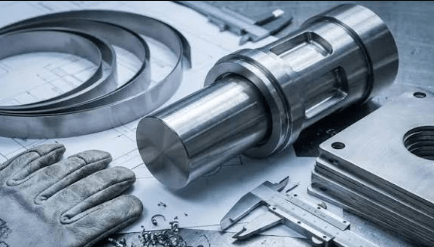
Thin metal materials are essential in industries where weight, corrosion resistance, and dimensional control influence product performance. From chemical processing equipment to specialized industrial components, engineers often need materials that can withstand demanding environments without adding unnecessary mass. Titanium is an important option because it combines relatively low density with useful mechanical properties and strong corrosion resistance in many environments.
Grade 1 commercially pure titanium is known for its high ductility and comparatively low strength among commercially pure titanium grades. These characteristics can make it suitable for applications requiring forming, bending, or shaping into thin components. Choosing the right foil, however, requires careful attention to thickness, surface condition, material certification, and the intended manufacturing process.
Understanding Grade 1 Titanium
Titanium grades differ in composition and mechanical characteristics. Grade 1 is a commercially pure grade valued for its formability and corrosion resistance in appropriate service conditions. Compared with stronger titanium grades, it generally offers lower tensile strength but greater ductility.
This balance makes it useful where forming characteristics are important. Thin titanium components may need to be cut, stamped, shaped, or integrated into an assembly with limited available space. Engineers should still verify the grade against the operating environment, required strength, and applicable industry standards.
Why thickness selection matters
Foil thickness influences flexibility, stiffness, weight, handling, and manufacturing behavior. A very thin sheet may be easy to shape but more vulnerable to wrinkling, tearing, or accidental damage during handling. A thicker option may provide greater rigidity but require different tooling or forming forces.
Designers should specify a thickness range based on functional requirements rather than choosing the thinnest available material automatically. Tolerances also matter: variations in thickness can affect fit, dimensional consistency, and performance in assemblies that require close control.
Evaluating Material for a Specific Application
When sourcing titanium valleys Gr1 Titanium Foil buyers should confirm the exact grade, thickness, width, length, dimensional tolerances, surface finish, and available inspection documents. Product descriptions are a starting point, but technical documentation should be used to confirm suitability for a particular design.
Corrosion resistance and operating environment
Titanium forms a stable oxide layer that contributes to its corrosion resistance. In many environments, this provides useful protection, but titanium is not immune to every form of chemical attack. Performance depends on the chemical composition, concentration, temperature, flow conditions, and presence of other materials.
Engineers should review the complete service environment before selecting the grade. Where the component will contact aggressive chemicals or operate under unusual temperature conditions, material compatibility should be confirmed using relevant corrosion data or qualified testing.
Surface condition
Surface finish can affect appearance, cleaning, bonding, forming, and the performance of thin components. Some applications require a uniform finish, while others may need additional processing before the material is assembled.
Scratches, embedded particles, stains, and handling marks may be significant in precision applications. Specify acceptable surface conditions at the purchasing stage and agree on inspection criteria with the supplier. Proper packaging helps protect the material during transportation and storage.
Manufacturing and Handling Considerations
Thin titanium material requires careful handling because creases, dents, and edge damage may be difficult to remove. Operators should use clean work surfaces, suitable gloves where appropriate, and tools designed for the intended thickness. Protective films or packaging should be removed according to the processing requirements.
Cutting and forming methods should be selected based on material thickness, geometry, production volume, and edge-quality requirements. Tool condition and process settings can affect burr formation, surface damage, and dimensional accuracy. For complex shapes, trial pieces may help confirm the process before full production begins.
Titanium fabrication also requires attention to contamination. Contact with unsuitable tools or materials can introduce surface contaminants. Where welding or other heat-based processing is involved, procedures must be designed to protect the material from contamination and oxidation at elevated temperatures.
Storage and traceability
Keep foil protected from moisture, dirt, and mechanical damage. Store rolls or sheets in a way that prevents distortion, edge damage, and accidental creasing. Clearly label material by grade, batch, and dimensions so that traceability is maintained through production.
For regulated or quality-sensitive industries, retain the material certificates and inspection records required by the relevant specification. Traceability is especially important when multiple titanium grades are used in the same facility.
Comparing Grade 1 with Other Titanium Grades
Grade 1 is not automatically the best choice for every thin-material application. Other commercially pure grades may offer different strength and formability characteristics, while titanium alloys can provide higher strength for designs that require it.
The selection process should balance mechanical requirements, forming needs, corrosion resistance, material availability, and total manufacturing cost. A stronger alloy may permit a thinner component in some applications, but it may also require different tooling or processing conditions. Conversely, a highly formable grade may simplify complex shaping operations.
Material substitution should be reviewed by the responsible engineer rather than based on price or nominal thickness alone.
FAQs
- What is Grade 1 titanium foil used for?
Potential uses include formed components, corrosion-resistant parts, specialized industrial assemblies, and applications where ductility and low material weight are useful. Suitability depends on the design and environment.
- Is Grade 1 titanium suitable for every chemical environment?
No. Titanium’s corrosion performance depends on the specific chemicals, concentration, temperature, and operating conditions. Compatibility should be verified before use.
- What should buyers check before ordering titanium foil?
Confirm the grade, thickness, tolerances, dimensions, surface condition, material documentation, packaging, and the requirements of the intended manufacturing process.
Conclusion
Grade 1 titanium foil can be a practical material choice where formability, corrosion resistance, and low weight are important. Its successful use depends on selecting suitable dimensions, controlling surface quality, preventing contamination, and verifying compatibility with the service environment. Clear specifications and traceable material documentation help manufacturers achieve more consistent results.