Gambling Addiction in Mumbai: The Family Found ₹8 Lakh of Debt. What Should They Understand Next?
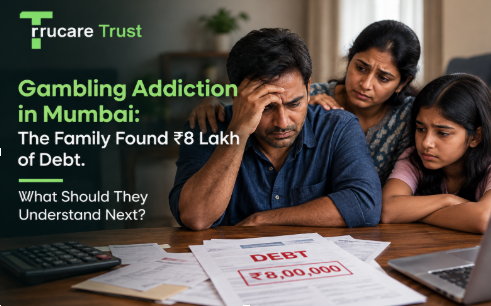
The first discovery was a credit-card balance.
Then came the loan.
A week later, the family found transfers to an account they did not recognise. By the time everything was added together, the amount was close to ₹8 lakh.
The immediate plan was obvious to everyone except the person who had gambled.
Take the phone away.
Control all money.
Repay the debt.
Make him promise never to gamble again.
Three of those steps may reduce immediate access or financial pressure.
None necessarily explains why the gambling reached ₹8 lakh.
That is where gambling addiction treatment Mumbai becomes relevant.
Why doesn’t a large loss automatically make somebody stop?
Because the loss can become the reason to continue.
A person loses ₹50,000 and feels desperate to hide it.
A ₹75,000 win would repair the problem.
So another bet is placed.
That loses too.
Now the person is not trying to make money in the ordinary sense. They are attempting to erase previous gambling with more gambling.
The target keeps moving.
This is commonly described as chasing losses.
From outside, continuing after a large loss appears completely irrational.
Inside the cycle, stopping can feel like accepting a disaster while continuing still contains the possibility, however unrealistic, of reversing it.
See also: Best Foot Massager in Pakistan for Pain Relief | Highlife
Gambling disorder is clinically recognised
WHO includes gambling disorder among disorders due to addictive behaviours.
Its 2024 fact sheet estimates that around 1.2% of the world’s adult population has gambling disorder.
This is a global estimate, not a Mumbai prevalence figure.
WHO also reports broader gambling harm beyond the person placing the bets. Its evidence review notes an estimate that for every person gambling at high-risk levels, an average of six other people are affected.
In a family, that is not hard to understand.
Savings vanish.
School fees may be delayed.
Parents lend money.
A spouse takes over repayments.
Trust deteriorates long before all the debt is even known.
Paying the ₹8 lakh is not treatment
It may still be necessary to organise the debt.
Interest continues.
Lenders want repayment.
Financial planning matters.
The problem is what happens if the family pays every rupee while the person still believes gambling can solve financial pressure.
Three months later, new credit becomes available.
The same mental shortcut returns.
“I can make some of the money back.”
The debt may begin again from zero.
This is why treatment approaches such as cognitive behavioural therapy and motivational interviewing matter. WHO identifies both among the approaches with stronger evidence in gambling-disorder treatment.
Thinking patterns are not an abstract side issue.
They can determine whether the next ₹10,000 becomes groceries or another attempt to recover the last loss.
Smartphones made hiding gambling easier
There is no need to travel anywhere.
A person can gamble at 1 a.m. beside a sleeping spouse.
Money moves instantly.
Live betting creates one decision after another.
Deleting the application may be sensible in early recovery, but the technical barrier is weak if the person remains determined to gamble.
Another account can be opened.
Another device exists.
That is why access restriction works best alongside treatment rather than in place of it.
The most dangerous moment may come after discovery
Exposure produces shame.
The amount is finally known.
The family is angry.
The person sees the consequences clearly for the first time.
This can produce intense hopelessness.
WHO’s gambling material explicitly identifies suicide as part of the serious health burden associated with gambling disorder.
Any statement suggesting self-harm, suicide or that the family would be “better without me” should be treated as a safety issue.
Debt can be renegotiated.
A life cannot.
What does residential gambling treatment actually need to change?
The person can live for several weeks without betting if phones and money are controlled.
That proves access was successfully controlled.
It does not necessarily prove the gambling cycle changed.
Families considering gambling rehab in Mumbai should ask how the programme addresses chasing losses, financial triggers, distorted expectations around winning, secrecy and the situations in which gambling normally occurs.
Salary day deserves attention if gambling repeatedly follows salary.
Cricket deserves attention if betting revolves around cricket.
Alcohol deserves attention if almost every major loss occurs after drinking.
Details matter.
The ₹8 lakh figure will dominate the first family meeting because it is concrete and frightening.
Treatment has to look underneath it.
The financial question is, “How do we repair this debt?”
The addiction question is, “What would stop the next debt from being created?”
They are related questions.
They are not the same one.