Creating Consistent Finishes for Furniture and Wood Products
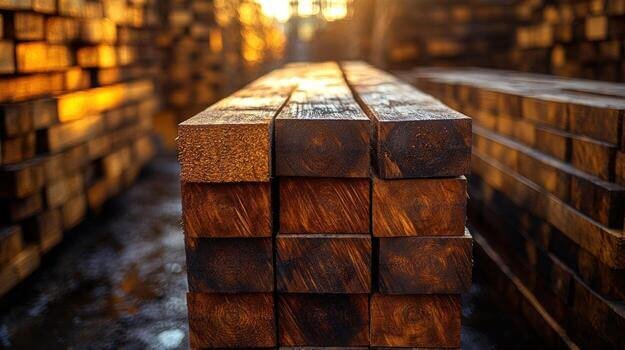
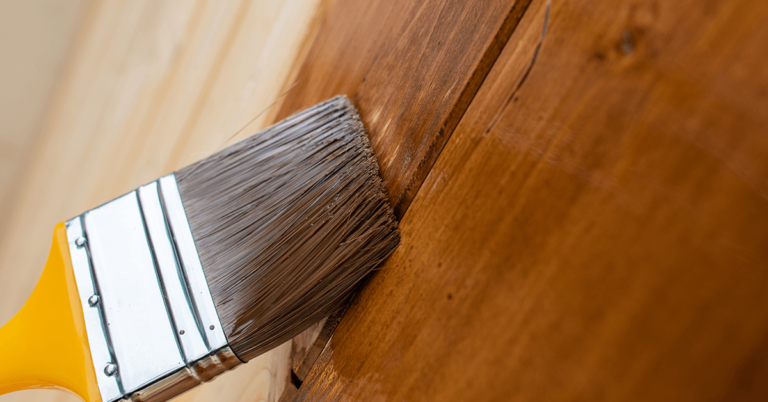
A well-finished wooden surface can significantly influence the appearance and perceived quality of a finished product. Furniture, cabinets, doors, decorative panels, and other wood products may require coatings that provide a smooth and consistent appearance while supporting everyday durability.
Developing such a finish involves more than selecting a resin. The formulation must be designed around application conditions, substrate characteristics, drying behavior, surface appearance, and long-term performance.
Fine mineral materials can be considered when adjusting specific properties of water-based wood-finishing systems.
The Purpose of a Wood Finish
A wood finish serves both functional and visual purposes.
It can create a protective surface while also controlling characteristics such as gloss, smoothness, transparency, and color appearance.
The desired result varies by product. A premium piece of furniture may require a highly refined appearance, while a commercial cabinet may prioritize durability and efficient processing.
The formulation should therefore begin with a clear definition of the finished product requirements.
Water-Based Finishing Technology
Water-based coating systems are increasingly relevant to manufacturers seeking practical alternatives to traditional solvent-heavy processes.
However, water-based formulations require careful control of drying and film formation.
The water needs to evaporate under suitable conditions, while the binder forms a continuous film. If drying conditions are unsuitable, the final surface may not develop the desired characteristics.
Temperature, humidity, airflow, and film thickness can all influence results.
Surface Characteristics of Fine Silica
Fine silica materials can provide specific physical characteristics that make them useful for formulation research.
Their surface area and interaction with other ingredients can influence rheology and dispersion.
In some formulations, they may also affect surface texture or mechanical behavior.
The exact effect depends on the material and formulation, so manufacturers should evaluate candidate products through controlled testing.
Getting the Right Finish
The appearance of a finished wood product depends on multiple factors.
Surface preparation must be consistent. Coating viscosity needs to match the application method. Film thickness must remain within the intended range, and drying conditions should be controlled.
Even small variations can create visible differences.
For this reason, automated production environments often require precise process control.
Furniture Manufacturing Considerations
Furniture coatings may experience frequent handling, cleaning, contact with objects, and occasional moisture exposure.
The coating should therefore be selected according to the expected service conditions.
A dining table, cabinet, decorative panel, and bedroom furniture piece may all have different performance requirements.
Manufacturers should avoid assuming that one coating formulation will provide optimal results for every product.
Importance of Adhesion
A finish must remain attached to the wood surface during use.
Adhesion can be influenced by wood species, surface preparation, coating chemistry, moisture, and drying conditions.
Sanding and cleaning procedures should therefore be standardized.
When testing a new formulation, manufacturers should evaluate adhesion on the actual substrates that will be used in production.
Controlling Coating Viscosity
Viscosity affects application consistency.
If a coating is too thin, achieving the desired film thickness may be difficult. If it is too thick, spreading and leveling can become challenging.
Fine silica can influence the rheology of a water-based formulation and may therefore be investigated when adjusting these properties.
However, any change in additive concentration should be evaluated for its impact on the complete coating system.
Storage and Production Stability
A formulation needs to remain stable from manufacturing through application.
Changes in viscosity, settling, separation, or other physical properties can affect the final product.
Manufacturers can use accelerated stability tests to identify potential issues before commercial release.
Production batches should also be compared against defined specifications.
For additional information about the use of silica in wood coating development, hydrophilic silica wood finish can serve as a technical reference.
Building a Reliable Production Process
Consistency is especially important for companies manufacturing large volumes of coated wood products.
A reliable process should define:
- Raw material specifications
- Mixing sequence
- Mixing time
- Temperature conditions
- Application parameters
- Drying conditions
- Quality-control checks
Documenting these parameters makes it easier to identify the source of any variation.
Frequently Asked Questions
- What determines the quality of a wood finish?
Surface preparation, coating formulation, application method, film thickness, drying conditions, and substrate characteristics all contribute to the final result.
- Can fine silica be used to modify a wood coating?
It can be evaluated as a formulation component for influencing properties such as rheology and dispersion. The appropriate material and concentration depend on the specific coating system.
- Why is substrate testing important?
Wood species and surface conditions vary. Testing on representative substrates helps manufacturers understand how the formulation will behave in real production.
Conclusion
Producing a consistent wood finish requires coordination between material selection and manufacturing processes. Water-based systems can provide useful formulation opportunities, while carefully selected mineral components can help adjust specific physical properties.
A controlled approach to surface preparation, formulation, application, drying, and quality assurance gives manufacturers a stronger foundation for producing attractive and reliable wood products.