Types of Rock Bolts Explained: Mechanical, Grouted and Friction Anchors
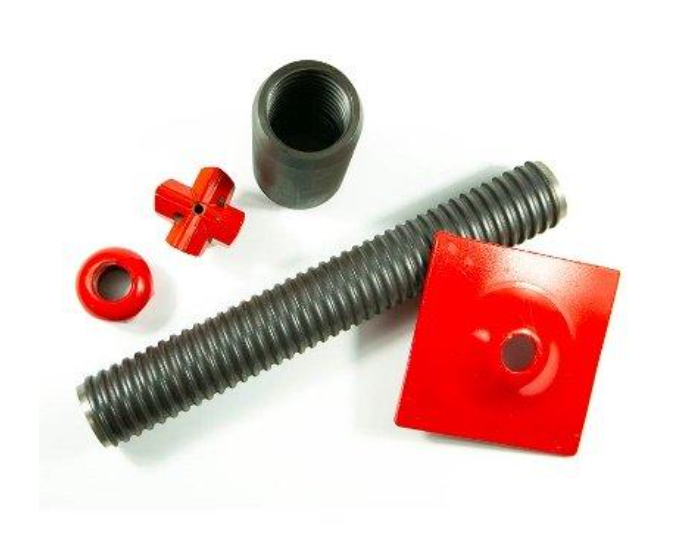
Rock bolts come in several types, and the wrong choice can leave ground unsupported or waste money on a system the rock does not need. The main families are mechanical, grouted and friction bolts, each anchoring into the rock differently and suiting different ground. This article explains how each type works, where it performs best and what to watch for.
Mechanical Rock Bolts
A mechanical rock bolt grips the rock at a single point deep in the hole. The bolt has an expansion shell at its far end: when rotated or tensioned, the shell expands against the hole and wedges itself in place. The nut at the face is then tightened, putting the bolt into tension and clamping the layers together.
Mechanical bolts act immediately, which is their great advantage. As soon as the shell is set and the nut is tightened, the bolt is carrying load, with no waiting for grout or resin to cure. That makes them ideal for rapid support in tunnelling, where the bolting cycle must keep pace with excavation. They suit hard, competent rock where the hole stays clean and the shell can grip firmly.
Their weakness is the single anchor point. If the rock at the shell is weak or fractured, the grip can fail, and the bolt carries its full load through one small area. Mechanical bolts also need accurate hole diameters: too large a hole and the shell cannot expand enough to grip, too small and the bolt will not fit. A good rock bolt manufacturer supplies shells matched to the bolt and the drill bit, so the system works as designed.
Grouted and Resin Rock Bolts
Grouted rock bolts are bonded to the rock along their whole length. The bolt is placed in the hole, and cement grout or resin fills the gap between the bar and the rock. Once it sets, the bolt is bonded continuously, and load is transferred along the full length rather than at a single point.
Resin bolts from a rock bolt manufacturer are the common choice underground. A resin cartridge is pushed into the hole ahead of the bolt, and spinning the bolt mixes the resin, which sets in minutes. Cement-grouted bolts take longer to cure but cost less and suit permanent work. Both types distribute the load, which makes them strong in fractured ground where a mechanical shell might not grip.
Because the bond runs the full length, grouted bolts also protect the steel from corrosion, since the grout or resin seals it from air and water. That matters in permanent tunnels and mines where the openings must last for years. The trade-off is time: the bolt cannot be fully loaded until the grout or resin has set, though with fast resins that wait is only minutes.
Friction Rock Bolts
Friction bolts work differently again. They are a slotted steel tube, slightly larger than the hole, that is driven in with force. The tube compresses as it enters, and the spring-back presses it against the walls of the hole along its whole length. The grip comes from friction, not from a mechanical shell or a chemical bond.
Friction bolts are quick to install and need no resin or grout, which makes them popular in mining for temporary support in ground that moves. They can slip a little under load rather than failing suddenly, which suits deforming ground. Their holding power is lower than a grouted bolt of the same size, and they offer less corrosion protection, so they are usually chosen for short-term support or as part of a system with mesh and shotcrete.
Cable Bolts for Wide Spans
For wide spans, such as tunnel junctions or large mine chambers, cable bolts from a rock bolt manufacturer are used. These are flexible steel cables, grouted into long holes, that tie a large volume of rock together. Because they are flexible, they can be installed in long lengths and directions a rigid bar cannot reach. They are often used alongside standard rock bolts, carrying the heavy loads while the shorter bolts handle the face.
Choosing Between the Types
The choice of rock bolt from your rock bolt manufacturer depends on the ground, the timing and the life of the opening. Hard rock and fast advance favour mechanical bolts; fractured ground and permanent work favour grouted or resin bolts; deforming ground and temporary support favour friction bolts; wide spans call for cable bolts. In practice, many projects use more than one type from their rock bolt manufacturer, matching each to the ground it faces. A rock bolt manufacturer with the full range can supply the mix a project needs, with plates, nuts and resins to match.
5 Factors That Decide the Bolt Type
- Ground quality: hard and competent rock suits mechanical bolts; fractured rock suits grouted bolts.
- Speed: mechanical and friction bolts load immediately; grouted bolts need curing time.
- Design life: permanent work needs the corrosion protection of grout or resin.
- Deformation: ground that moves suits friction bolts, which can yield without failing.
- Span: wide openings need cable bolts to tie a larger volume of rock together.
Frequently Asked Questions
Can different bolt types from one rock bolt manufacturer be used in the same tunnel?
Yes, and it is common. The support design changes with the ground, so one section may use resin bolts while another uses mechanical bolts or friction bolts.
How do I know if a bolt is carrying its design load?
Pull testing on site is the standard check, and your rock bolt manufacturer can advise on the testing regime. A sample of bolts is loaded to the design value, and the results confirm the system is performing.
Do rock bolts need maintenance?
Installed bolts need little maintenance, but plates, nuts and mesh should be inspected regularly, and any damaged or corroded components replaced.
Final Thoughts
Mechanical, grouted and friction bolts from a rock bolt manufacturer each solve the same problem in a different way: gripping the rock, clamping it together and letting the ground support itself. Match the type to the ground, the timing and the life of the opening, and the bolting system will do its job quietly, holding the roof where it belongs.