Radar Speed Signs on Rural Curves and Highways: Evidence from the FHWA Study
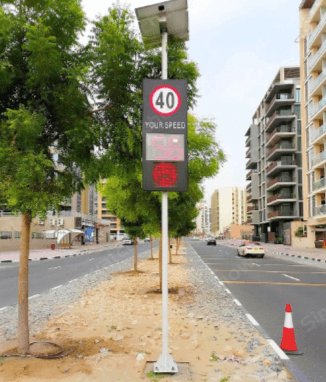
A radar speed sign gives a driver one piece of information at exactly the moment it matters: the speed they are travelling right now, shown on a bright display beside the road. On rural curves, where a bend can arrive faster than expected, that instant feedback can be the difference between a controlled entry and a dangerous one.
The study is the Federal Highway Administration’s national demonstration project, published in January 2015 as report FHWA-HRT-14-020 and carried out by Iowa State University. It tested dynamic speed feedback signs at 22 rural two-lane curve sites across seven US states and tracked the results for two years.
What the FHWA Demonstration Project Measured
The project placed a speed display sign on the approach to each curve and recorded vehicle speeds for extended periods before and after installation. Each site was a rural two-lane road with a curve carrying a posted or advisory speed, the kind of location where a driver who enters too fast has little room to recover. The same protocol at all 22 sites let researchers separate genuine effects from local quirks.
- 22 rural two-lane curve sites, spread across seven US states.
- Before-and-after speed measurements at every site.
- Posted and advisory speeds used as the benchmark for compliance.
- Results tracked for 24 months after installation.
Mean and 85th-Percentile Speed Reductions
The headline result was the size of the speed drop. Mean speeds fell by up to 10.9 mph at the best-performing sites, enough to change stopping distances and crash severity on a rural curve. Most sites recorded a cut of 3 mph or more in the 85th-percentile speed, the speed at or below which 85 percent of drivers travel.
- Mean speed decreases reached up to 10.9 mph at the strongest sites.
- Most sites cut 85th-percentile speed by 3 mph or more.
- Reductions appeared across sites in all seven states.
- Even small drops matter on curves, where a few mph changes the margin for error.
They line up with smaller studies elsewhere. Texas Transportation Institute researchers recorded an 18 percent fall in average school-zone speeds, from 50 mph to 41 mph, with radar speed signs, while Montana State University measured 5 to 10 percent reductions on rural roads.
Fewer Vehicles Over the Posted Speed
Average speeds only tell part of the story. A dynamic speed feedback sign also changes how many drivers exceed the limit at all. At most sites in the FHWA project, the share of vehicles travelling over the posted or advisory speed fell by 35 to 70 percent, a major improvement in compliance where enforcement is difficult and patrols are rare.
- The share of vehicles over the limit fell 35-70% at most sites.
- Compliance improved without any police presence at the curve.
- The red display gives an unmistakable warning to speeding drivers.
Crash Reductions at Treated Curves
The FHWA project also estimated the effect on crashes. Expected total crashes fell by about 5 percent at treated curves, equivalent to a crash modification factor of 0.95. In the direction of travel facing the sign, the expected reduction was about 7 percent, a crash modification factor of 0.93.
- Expected total crashes fell about 5% (crash modification factor 0.95).
- In the direction of the sign, expected crashes fell about 7% (0.93).
- The crash benefit followed directly from lower approach speeds.
- Single-digit crash reductions are significant across a network of curves.
Applied across the many curves on a rural highway network, that represents real collisions avoided and real injuries prevented, achieved with a device that needs no officer, no roadworks, and no changes to the road itself.
See also: Glass Mosaic Bathroom Tiles: Grout Selection Guide for Residential Tile Installers
Effects That Held for 24 Months
One common doubt about speed feedback signs is whether drivers simply get used to them and speed up again. The FHWA project answered that directly: the measured speed reductions held for 24 months, the full tracking period of the study.
- Speed reductions persisted for the full 24-month study period.
- No rebound to pre-installation speeds was recorded.
- Speed data logging helps agencies confirm the benefit continues year after year.
What the Evidence Means for Rural Roads
The findings make a practical case. A speed feedback sign on a rural curve cuts average speeds by up to 10.9 mph, reduces the share of speeding vehicles by 35 to 70 percent, and is associated with about a 5 percent fall in expected crashes, with benefits holding for two years. The technology is straightforward: 24 GHz Doppler radar measures each approaching vehicle, and a bright LED speed display shows the result in time for the driver to slow down. For remote sites, solar models carry a battery that runs the sign through 7 to 10 days of rainy weather.
- Prioritise curves with a history of speed-related crashes.
- Place the sign where drivers can see it well before the curve begins.
- Use the posted or advisory speed as the threshold for the red display.
- Track results with speed data logging to confirm the effect locally.
Frequently Asked Questions
How much do radar speed signs reduce speeds on rural curves?
In the FHWA national demonstration project, mean speeds fell by up to 10.9 mph, and most sites cut 85th-percentile speed by 3 mph or more.
Do radar speed signs reduce crashes?
The FHWA study estimated that expected total crashes fell by about 5 percent at treated curves, and by about 7 percent in the direction of the sign.
How long do the speed reductions last?
The FHWA project tracked sites for 24 months and found that the speed reductions held for the full period, with no sign of the effect fading.
Final Thoughts
The FHWA national demonstration project is a large, multi-state study with clear, measured results. A radar speed sign on a rural curve slows drivers down, cuts the number of vehicles over the limit, reduces expected crashes, and keeps working for years. For any agency weighing how to make a dangerous curve safer, that evidence is a strong place to start.