Evaluating Natural Preservatives for Food Quality and Shelf Life
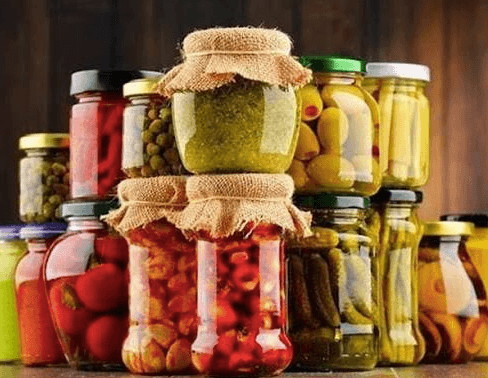
Preservation is an important part of food manufacturing because products must maintain acceptable quality throughout processing, storage, distribution, and use. Manufacturers choose preservation strategies according to the product’s composition, packaging, processing method, expected shelf life, and safety requirements.
Natural preservatives are sometimes considered by businesses seeking particular ingredient profiles or alternatives to conventional preservation systems. However, “natural preservative” is a broad category rather than a single ingredient with universal performance. Different materials work in different ways, and no ingredient should be assumed to provide adequate protection in every food product.
Start with the Product’s Preservation Needs
Before selecting an ingredient, manufacturers should assess the main factors that influence the product’s stability. These may include moisture content, pH, water activity, processing conditions, packaging, storage temperature, and the likelihood of contamination during handling.
The product category matters as well. A sauce, baked good, beverage, refrigerated food, and dry snack each present different preservation challenges. The appropriate strategy should be based on the product’s specific risks and the applicable food-safety requirements.
A preservation plan may involve several complementary controls rather than relying on a single additive.
Understanding Different Preservation Approaches
Ingredients that influence acidity
Some preservation systems rely partly on changes in acidity. Their suitability depends on the product’s formulation and the organisms or quality changes that must be controlled. Adjusting acidity can also affect flavour, colour, and texture, so the finished product must be evaluated.
Plant-derived ingredients
Certain plant-derived materials are used in preservation-related applications, but their effectiveness depends on composition, concentration, food matrix, and processing conditions. Evidence from one food cannot automatically be applied to another. Manufacturers should confirm that the selected ingredient has appropriate technical support for the intended use.
Formulation and packaging controls
Preservation is not limited to ingredients. Heat treatment, hygienic manufacturing, moisture management, suitable packaging, and temperature control can all contribute to product stability. The best approach depends on the food and its distribution conditions.
Multiple-hurdle strategies
Some products rely on several controls working together. The combination may include formulation, processing, packaging, and storage requirements. Each control should be validated for the specific product rather than assumed to be effective because it is used elsewhere.
What Buyers Should Check in a Preservative Ingredient
Identity and composition
The supplier’s specification should clearly identify the material and list relevant components. If the ingredient is a blend, buyers should understand its composition and the function of the different components.
Intended applications
Ask for technical information about the applications for which the ingredient is designed. Confirm whether the recommended use is supported by appropriate testing and whether it applies to the buyer’s product category.
Quality documentation
Depending on the ingredient and market, buyers may need a specification, lot certificate of analysis, ingredient declaration, allergen information, and relevant safety or quality records. The required documents should be determined by the manufacturer’s quality programme.
Storage and handling
Preservative ingredients may have specific storage requirements. Packaging, moisture exposure, temperature, and shelf life can influence quality. Follow the supplier’s guidance and ensure that handling procedures are appropriate for the material.
Validate Performance in the Actual Food
A supplier’s suggested use level is a starting point, not a substitute for validation. The development team should test the ingredient in the complete formulation and under the intended processing and storage conditions.
The test programme should consider the product’s sensory characteristics, physical stability, and relevant microbiological or shelf-life criteria. Appropriate validation methods depend on the food category and the risks being managed. Where necessary, qualified food-safety professionals and laboratories should be involved.
It is important to distinguish between maintaining sensory quality and controlling food-safety hazards. A product may look and smell acceptable while still requiring proper safety validation. Manufacturers should follow applicable regulations and established food-safety systems.
Regulatory and Labelling Review
The use of a preservative is subject to market-specific rules. Manufacturers should confirm whether the ingredient is permitted for the intended food, which use conditions apply, and how it must be declared on the label.
The word “natural” does not remove the need for regulatory review. Ingredient definitions, permitted uses, and labelling rules can vary by jurisdiction. Businesses selling into multiple markets may need different specifications or labelling approaches.
Selecting a Reliable Supplier
A supplier should provide clear technical information and respond to questions about composition, applications, testing, storage, and documentation. Buyers should also consider lot consistency, packaging, lead times, and the supplier’s procedure for handling complaints or specification changes.
For businesses evaluating green spring technology Bulk Natural Preservatives identify the exact product that matches the intended application and request its current specification. Ask for supporting technical information and samples where appropriate, then confirm the ingredient’s regulatory suitability before approving it.
Do not select a preservative solely because its description sounds suitable. Its effectiveness must be evaluated in the complete product and within a validated food-safety plan.
Managing Bulk Procurement and Storage
Bulk orders should be aligned with production forecasts, storage capacity, shelf life, and the supplier’s lead time. Purchasing excessive quantities before validation may create avoidable waste or leave the business holding an ingredient that does not perform as expected.
Incoming materials should be inspected according to established procedures. Maintain lot traceability and document how the ingredient is used in production. If the supplier changes the composition or manufacturing process, assess whether additional evaluation is needed.
FAQs
- Can a natural preservative replace every conventional preservative?
No. Performance depends on the ingredient, the food matrix, processing conditions, and the target microorganisms or quality changes. Each application needs evaluation.
- Does adding a preservative automatically make a food safe?
No. Food safety requires appropriate formulation, hygienic processing, storage, packaging, and validation. A preservative is only one possible control.
- What should manufacturers request from a supplier?
Request the specification, composition, recommended applications, relevant quality documentation, storage instructions, and supporting technical information for the intended use.
Conclusion
Choosing a natural preservative requires a product-specific assessment of safety, stability, sensory quality, and regulatory requirements. Manufacturers should define the preservation challenge, verify the ingredient’s suitability, and validate its performance under realistic conditions. Clear supplier documentation and disciplined process controls help support both product quality and responsible food-safety management.